Vicarious Trauma, and How We Protect Those Who See


More people see,
watch footage from war zones,
scroll through livestreamed violence,
listen, in detail, to what was done to someone else.
Some even have to review child abuse material for evidence.
This is the work of law enforcement teams, military units, digital investigators, content moderators, investigative journalists, and emergency / medical responders.
Increasingly, it is also the experience of the general public, consuming graphic material on their electronic devices.
Vicarious trauma is no longer a niche clinical term. It is becoming a structural condition of how we work, inform, and bear witness.
At Context First, we approach this reality through one central concept: connection. Not connection as abstraction, but connection as the living bond between the person who is witnessing and the person, image, or story they are witnessing.
When that connection is left unsupported, unstructured, and unmanaged, it causes profound and long-lasting harm.
What is vicarious trauma?
Vicarious trauma refers to the cumulative, negative changes in a person's inner world that result from empathetic engagement with others' trauma. It is not a sign of weakness. It is a predictable impact of sustained exposure.
Several warning signs emerge in people who are continuously exposed to traumatogenic material. You start noticing a kind of emotional spillover, carrying anger, grief, or a heavy helplessness home with you, long after the shift has ended.
You catch yourself stepping past what is realistic or within your role, trying to save, fix, or rescue everyone, as if their survival depends entirely on you. Quietly, a bystander's guilt can grow: the sense that you are not doing enough, that you should have stopped something, that if you were better, stronger, faster, this would not have happened.
Over time, your perception of life darkens…
Trust feels naive.
Cynicism overwhelms your limbic system.
Hope blurs into the emotion of lost battles.
You go numb.
You stay busy.
You avoid being fully present with loved ones, not because you do not care, but because caring becomes too costly.
Thoughts about particular scenes begin to follow you into the shower, into bed, into what was supposed to be a joyful evening. Certain faces appear when you do not invite them. The line between your life and theirs thins. You drift into rescue fantasies or mentally rewrite events so they end differently. You even imagine your own family in their place.
Boundaries erode.
You answer out of hours and keep saying yes to overtime.
You attend to one more patient, obey one more deployment, investigate one more crime scene, and watch one more video. Your attention and your body become increasingly available to the work and less available to your restorative time.
If you recognise yourself in pieces of this, it is not proof that you are failing.
It is evidence that the work is landing in your nervous system, that your connection to those you serve is doing what it is designed to do: respond.
The risk is not that you feel. The risk is being left alone with those feelings, without language, structure, or support.
Connection: when empathy binds and burns
Our capacity to connect promotes justice, supports journalism, calls for frontline response, and advocates for human rights.
But connection without context becomes enmeshment.
For professionals repeatedly viewing or hearing extreme harm, several things happen:
The nervous system pairs "showing up for others" with images of horror.
The worker's sense of safety and trust slowly reshapes around what they witness.
The line between "their story" and "my inner world" starts to blur.
At Context First, we do not ask people to detach from their humanity.
We ask: how do we protect the connection system itself, so that you care without being consumed?
That is the core of contextual vicarious trauma mitigation.
A final word if you are reading this while carrying too much
If any of this feels uncomfortably accurate, take that as data, not judgment.
You are impacted because you care, imagine, and connect.
You do not have to choose between being effective and being whole.
Start with one small act of context: one boundary, one check-in, one honest conversation, one step away from the screen when you notice your body tightening.
From there, we can build systems and tools that honour both your role and your nervous system, your commitment and your limits.
You are not meant to fight this alone.
USE OF AI:
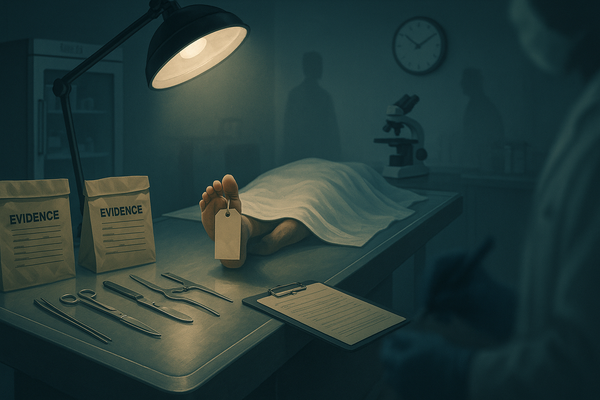
Cover Image generated by ChatGPT (OpenAI).
Estimated AI involvement in text and sentence structures: 5–10%.
The content was verified and edited by the author..